
Editorial illustration for the mechanics guide.
Bingo-based slot machines determine results through a bingo game and may use spinning reels to present the corresponding award. In a system with that alternate display, the sequence runs from a card and drawn numbers to a qualifying pattern, an award, and then a matching reel presentation.
The practical question is what the game’s rules say determines the result. Spinning symbols alone cannot tell you whether the reels select an outcome or depict one established by bingo.
How the bingo result is determined
The underlying process starts with a numbered bingo card. As numbers are drawn, matching numbers on the card are covered or marked. The rules designate a winning pattern in advance. A card must meet the relevant pattern and winning conditions for an award.
That makes the card, draw, and pattern essential to understanding the result. If a separate reel display represents the award, its symbols provide another way to show what the bingo game has determined.
The NIGC’s Reel Time Bingo classification opinion, dated August 4, 2004, describes a submitted electronic design involving number cards, drawn designations, and competition to complete a predesignated pattern. The opinion concluded that the submitted version qualified as Class II. It is a historical finding about that particular design, not a classification of every terminal that looks similar.
Follow a card from draw to display
Imagine a made-up game in which three highlighted card positions contain 8, 15, and 31. For this example, covering those positions completes the designated pattern. A draw that includes all three numbers reaches that pattern.
Suppose the example’s award schedule assigns the pattern 4 credits. An alternate reel display can then depict a result worth four credits. The display matches the award established by bingo.
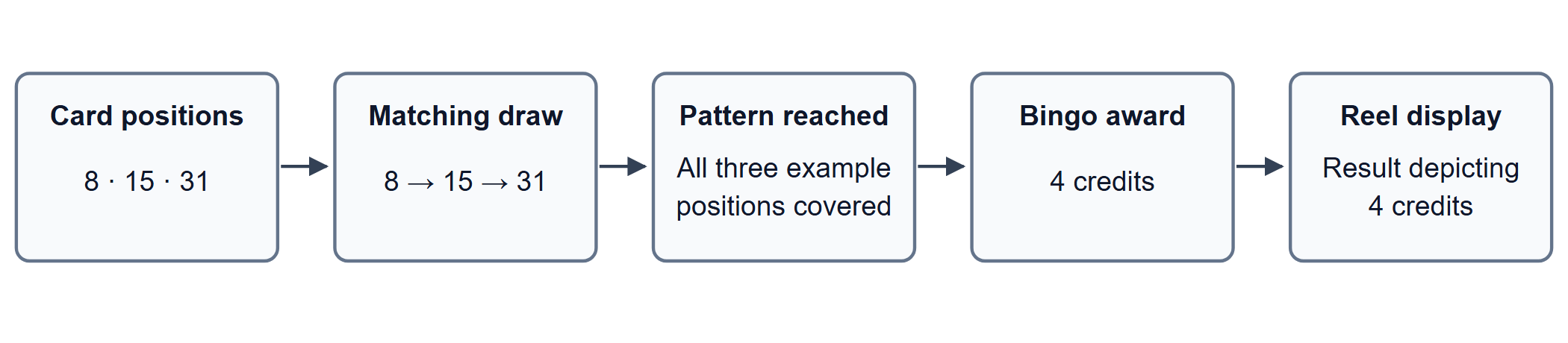
How reels can represent a bingo award
U.S. Patent 8,668,571 documents an architecture with a bingo outcome and a matching alternative reel presentation. In that patent example, the displayed reel stops correspond to the bingo result or award.
This explains how a bingo-determined game can present an award through familiar reel imagery. The correspondence matters: a four-credit bingo award can receive a reel presentation worth four credits without requiring an independent reel selection to establish that award.
The patent is evidence of a documented implementation, not proof that a current named product uses it. It is also a separate source from the NIGC’s Reel Time Bingo opinion; the patent’s alternate display mechanism should not be attributed to that historical submission.
Random draws and independent spins work differently
Random selection of bingo numbers and independent selection of reel outcomes are different processes. A result can involve randomness even when the reels serve as its presentation.
Where the rules specify drawing without replacement, a number already drawn cannot be drawn again during that round. Each later draw comes from the numbers remaining. Those calls therefore should not be treated as a series of independent spins.
An independent spin model treats each new spin’s outcome as independent of previous spins. Whether that model applies to a particular game must come from its documented rules. Reel animation does not establish it.
Identify what the reels mean in a particular game
Start with the actual game rules. Look for the card, the called numbers, the qualifying pattern, and the conditions that determine the award. Then check whether the rules explain how the reels relate to that result.
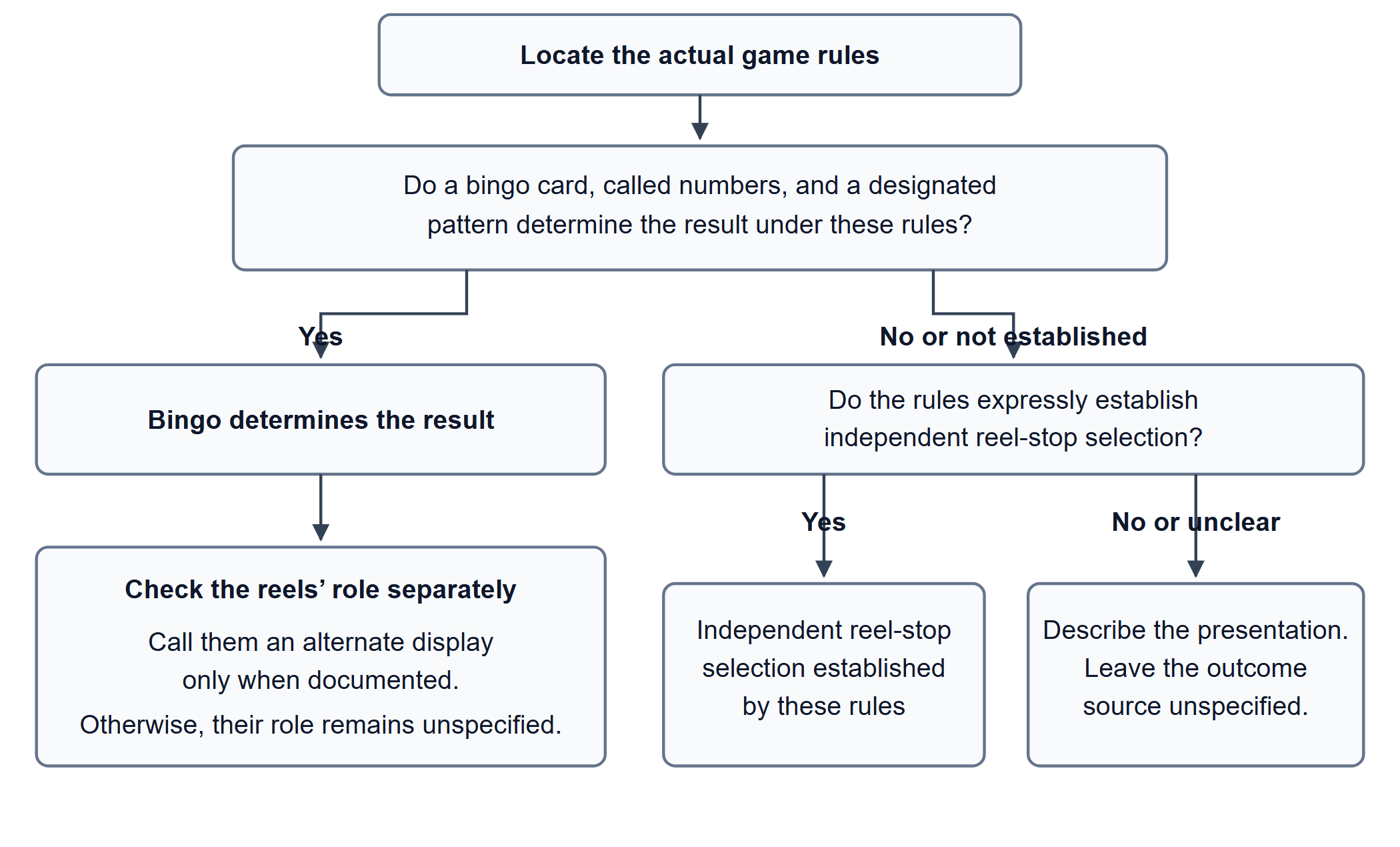
For example, if the rules establish bingo as the outcome source but leave the reels’ function unexplained, you can accurately describe a bingo-determined game with a reel-style presentation. You still lack support for a more specific claim about how that presentation is selected.
Keep odds, price, and return distinct
Knowing the mechanism does not supply the game’s economics. Odds describe the chance of an outcome. Price is the amount required to play. Expected return relates the average awards to the amount wagered over many plays.
A four-credit award tells you the award’s size in credits. It does not tell you how likely that award is, how much the play costs, or the expected return. Those questions require the actual rules, probabilities, and award schedule, alongside the explanation of what determines the result.
About the Author