Editorial illustration for the mechanics guide.
The history of slot machines follows three connected changes: how a machine displays symbols, how it selects a result, and how it pays a winning outcome. Those changes did not happen together. Physical reels remained in machines with electronic controls, while video screens introduced another way to show the game.
Following the surviving objects and technical records makes that overlap easier to see. A coin-operated cabinet, an automatic-payout reel machine, a powered hopper, a video display, and an electronic selection system each mark a different development.
Five milestones in slot machine history
| Period | Object or record | What it shows | Evidence and limits |
|---|---|---|---|
| 1893 | Clawson Lively Cigar Seller | Early coin-operated machinery provides context for the later reel-machine story. | SFO Museum catalogs the object as 1893. It is not evidence of an automatic reel-machine milestone. |
| Late 1890s | Liberty Bell, attributed to Charles Fey & Co. | Three physical reels and automatic payout appear together in the cataloged artifact. | SFO Museum dates its Liberty Bell to 1898; Nevada Magazine’s March/April 2006 account gives 1899. |
| 1960s | Bally electromechanical mechanisms | Physical reels operate within machines that include a mechanically and electrically controlled payout hopper. | Bally service manual no. 2600 documents the mechanisms and refers back to 1964. Nevada Magazine also identifies a 1964 transition; neither reference here settles an exact model debut. |
| Mid-1976 | Fortune Coin video slot | A video display and programmable electronics form part of a marketed slot machine. | Fairchild’s contemporary Horizons feature reports marketing in mid-1976 and use at the Las Vegas Hilton. |
| 1984 | Inge S. Telnaes’s U.S. Patent 4,448,419 | Randomly selected numbers map to physical reel stops, using more numbers than there are physical stops. | The patent issued May 15, 1984. It documents a design, not adoption by a particular current game. |
Coin operation and automatic reel payouts
A coin slot alone does not identify the mechanism behind it. The 1893 Clawson Lively Cigar Seller catalogued by SFO Museum belongs to the broader history of coin-operated machinery. It provides an early point of reference without establishing a date for automatic reel machines.
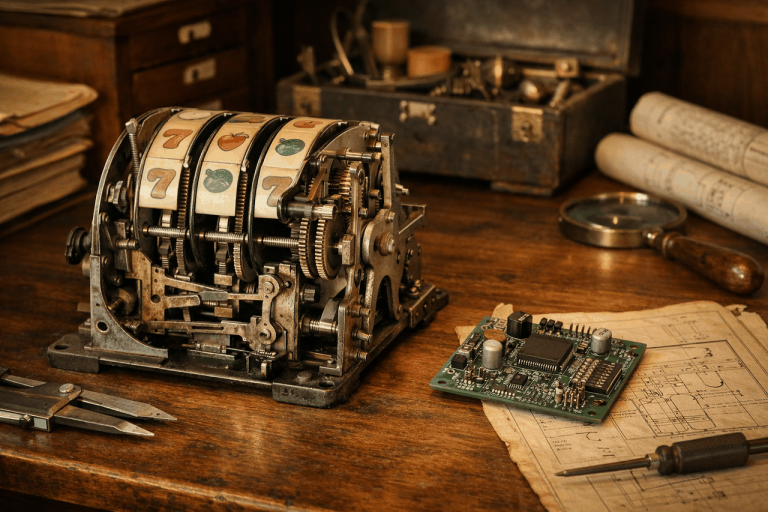
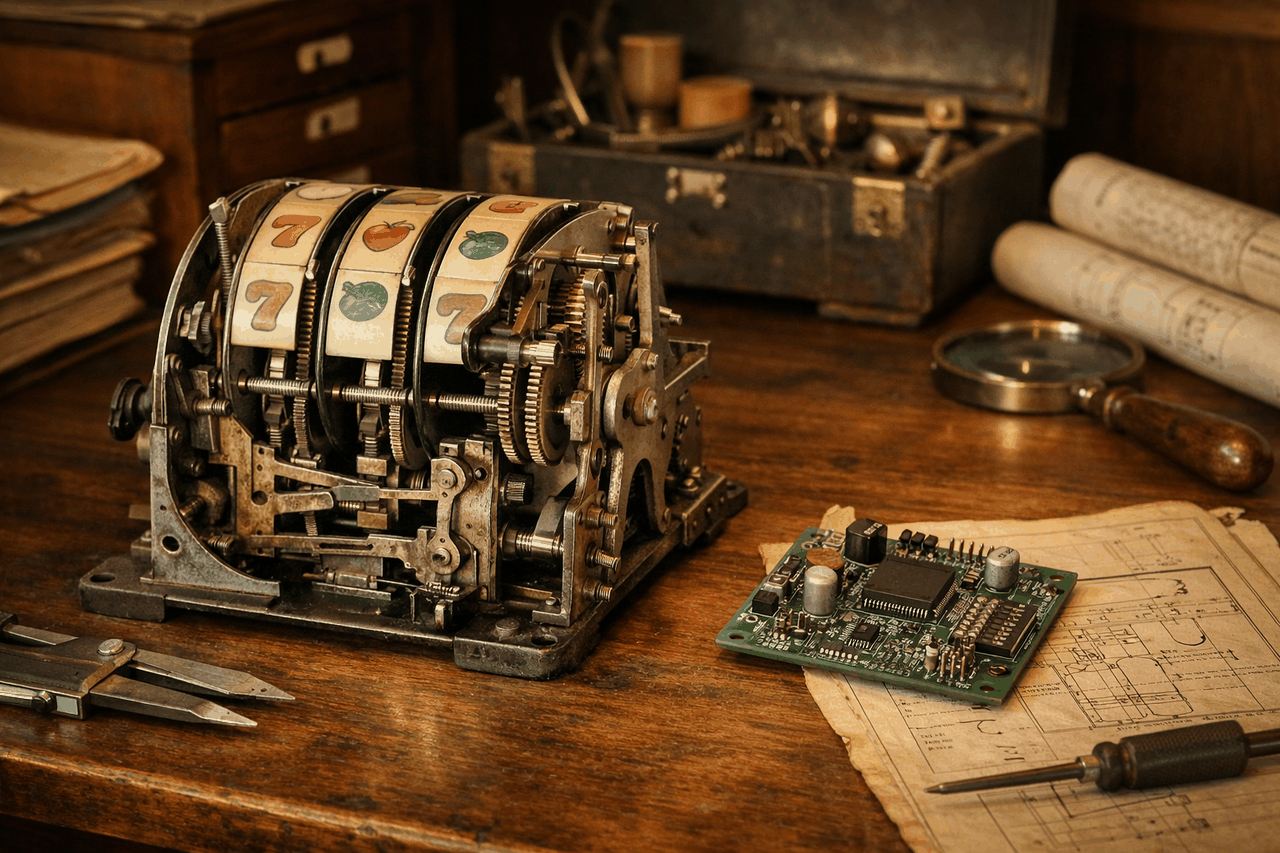
The Liberty Bell artifact brings the reel-machine story into sharper focus. SFO Museum describes an automatic-payout, three-reel machine attributed to Charles Fey & Co. Here, the physical display and the ability to pay a winning result are both part of the object’s significance.
Its date needs attribution. The museum’s catalog gives 1898, while Nevada Magazine’s 2006 historical account gives 1899. The useful conclusion is a late-1890s milestone with differing dates in the cited records. Neither date, by itself, establishes the invention date of every machine later called a slot machine.
Bally and the electromechanical transition
Electromechanical machines combined physical mechanisms with electrical control. Bally’s service manual no. 2600 makes that combination concrete: it covers machines with three, four, and five physical reels, along with a payout hopper containing mechanical and electrically controlled parts.
The hopper matters because paying an outcome is a separate task from displaying one. Electrical control could change the payout assembly while the player still watched physical reels. The move toward electronics therefore did not require an immediate move to a screen.
The dating evidence is narrower than an exact launch claim. Nevada Magazine identifies a Bally electromechanical transition in 1964, and the manual’s introduction connects later service procedures with mechanisms dating to that year. These records support the 1960s transition without fixing an exact Money Honey retail release date.
Video displays and electronic result selection
Fortune Coin illustrates a change in the display. In a contemporary feature preserved by the Computer History Museum, component supplier Fairchild reported that Fortune Coin marketed a video slot in mid-1976. The feature described programmable electronics and actual use at the Las Vegas Hilton at that time.
That is evidence of a marketed, operating video machine. It does not need an absolute “first” ranking to be historically useful: symbols could now appear on a screen instead of being printed on rotating reels.
Telnaes’s 1984 patent illustrates a different change—electronic result selection while retaining physical reels. The patented design uses a random number generator, or RNG, to select from numbers mapped to physical reel-stop positions. The number set is larger than the physical stop count.
This mapping separates the available electronic selections from the number of stops visible on a reel. Assigning more selection numbers to one stop gives that stop a greater chance of selection within the design. Counting physical stops alone therefore does not reveal their probabilities.
The chronology shows why “mechanical to digital” is not a simple sequence of cabinets replacing one another. Fortune Coin’s video record concerns the display; Telnaes’s later patent concerns selection behind physical reels. Screens and electronic selection developed on overlapping tracks.
Display, selection, and payout explained
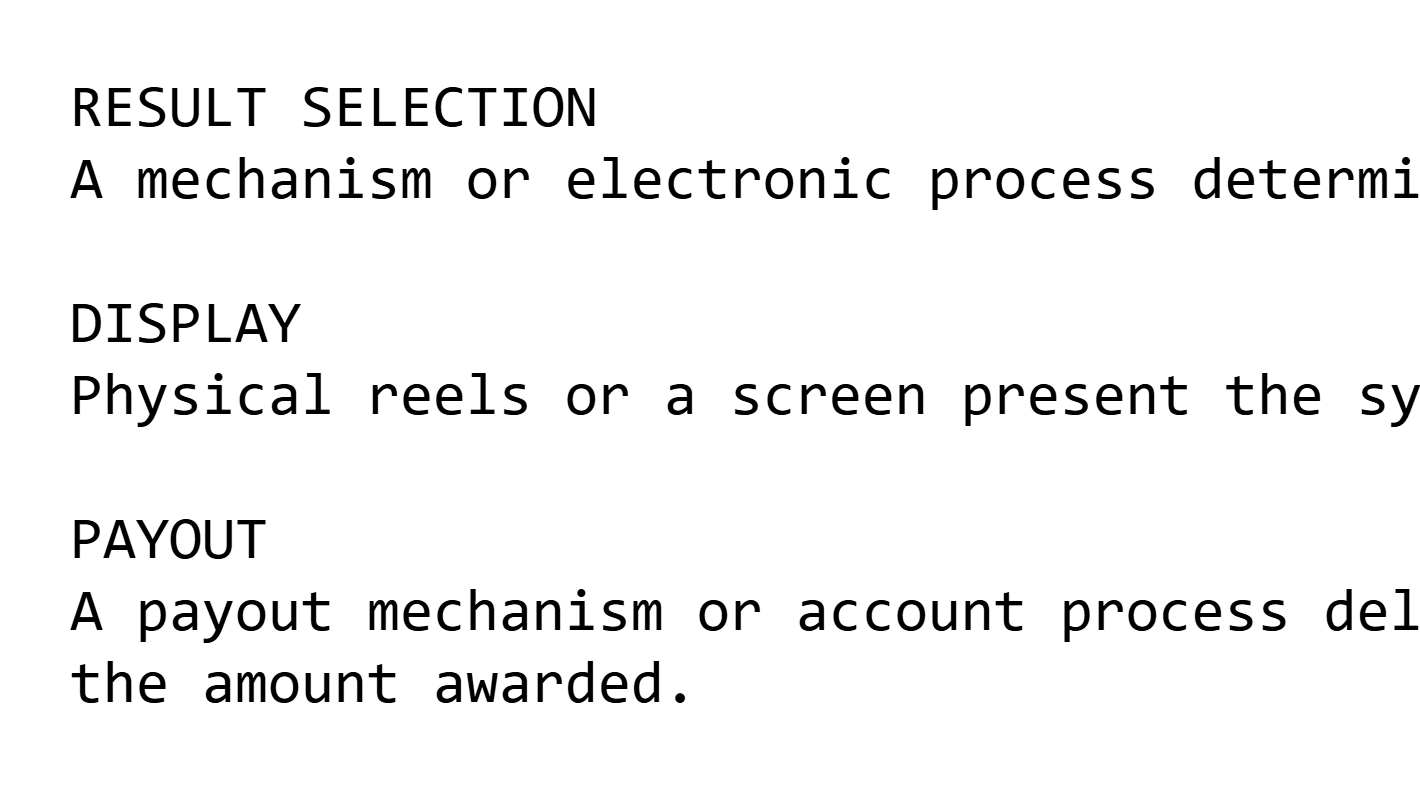
Keeping these jobs separate also keeps the terminology clear. Odds describe the likelihood of outcomes. Price describes the amount staked. Return concerns payouts relative to stakes. A new display does not, by itself, establish a change in any of those measures.
Remote equipment and modern slot types
Remote games extend the separation between the visible interface and the equipment performing other tasks. The UK Gambling Commission’s technical guidance distinguishes an RNG component from equipment hosting components. It also identifies download-only servers that do not participate once gambling starts.
That distinction helps explain why the device showing a game cannot, by appearance alone, reveal where its result is selected. The guidance does not establish one universal RNG location for online slots, and it describes UK technical context rather than US rules.
For readers comparing types of slot machines today, the historical questions remain useful: Are the reels physical or drawn on a screen? What selects the result? How is a payout delivered or recorded? Those three questions connect the surviving mechanical artifacts to digital systems more precisely than the cabinet’s appearance alone.
About the Author